
Maybe your sales team needs better negotiation skills. Maybe your engineering team needs to level up on new technology. Maybe customer service needs to get better at handling difficult situations. You could train in-office, but between emails and emergencies, it’s hard for anyone to focus.
That’s why professional development retreats exist. You take your team away, bring in an expert, run workshops, and people actually learn. I’m Marcella Kuchar a former HR manager turned Travel Advisor. Here’s how we organize training and skill building trips that actually moves the needle.
Define Your Learning Goal First
Before booking anything, get clear on what you’re actually trying to accomplish. A professional development retreat is an investment when you’ve got a specific skill gap to close, not just “we want a company trip.”
- Sales training: Negotiation workshops, objection handling, closing techniques. Typically 10-30 people, goal is measurable improvement in close rate and deal size.
- Technical training: A new language, framework, or tool, with hands-on practice. Usually smaller groups (5-20 people); goal is certification or demonstrated competency.
- Leadership development: Coaching for new managers on leading teams and handling difficult conversations. 5-20 people, goal is improved team dynamics and retention.
- Communication & soft skills: Customer service, conflict resolution, emotional intelligence. Can run 10-50+ people; goal is better interactions and customer satisfaction.
- New team onboarding: New hires, or two teams merging after an acquisition, getting to know each other and aligned on how the company works before diving into day-to-day work together. 5-25 people, goal is faster ramp-up and fewer early missteps.
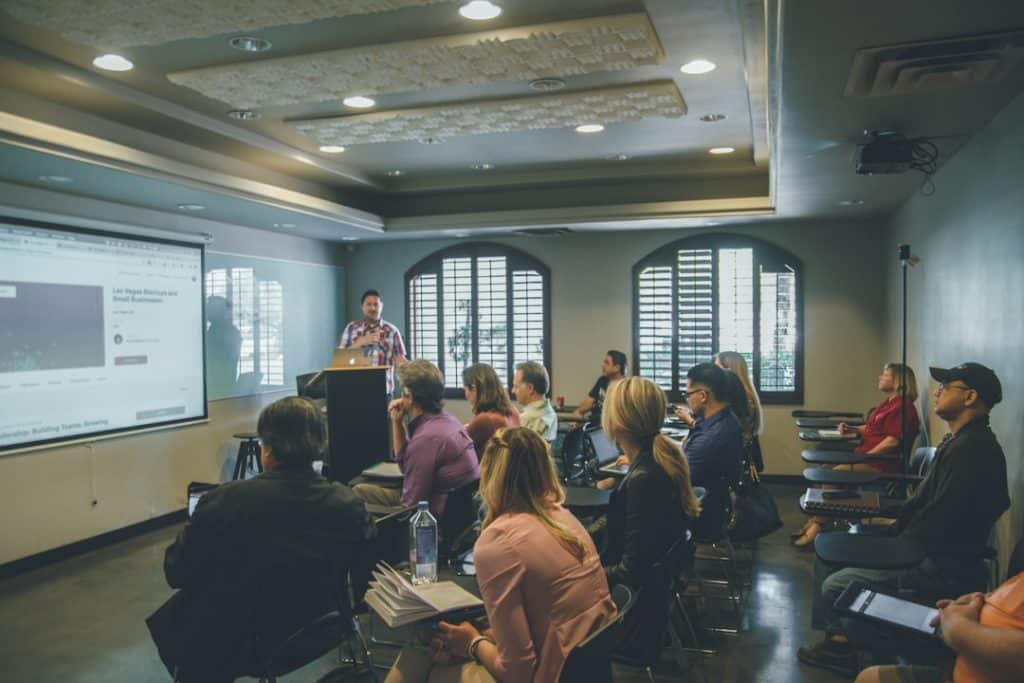
New-hire onboarding trips work a bit differently from the others on this list, since the goal is less about a specific skill and more about culture, relationships, and how the company actually operates. Pair a lighter, more social schedule with just enough structured content, company history, team introductions, how decisions get made, to shorten the awkward early weeks on a new team.
Choosing a Trainer
The trainer’s quality determines whether the retreat succeeds. If the trainer is bad, nothing else matters.
- External trainer or expert: Outside credibility and a neutral perspective, but costs more and needs vetting.
- Internal expertise: Cheap, and they know your business, but may not be a great teacher or may resent the extra work.
- Hybrid: Bring in an outside expert to train your own people to become internal trainers, which builds long-term capability but takes longer to set up.
Before you book: get references from other companies who’ve used them, have them run a sample session, confirm they understand your industry, and lock in price and availability early. Good trainers book up fast.
Feel free to ask our advisors for their recommendations. They’ve worked with countless speakers and trainers over the years.

What the Location Needs
For professional development, the location needs to support learning, not impress anyone:
- Good breakout spaces. Conference rooms or a classroom setup, not a beach bar.
- Reliable technology. WiFi and projectors that work, solid internet for technical training.
- A quiet environment. Not a party resort with constant activities pulling attention.
- Comfortable accommodations. Good sleep so brains actually work.
A hotel with good meeting space, a dedicated training retreat center, or even a coworking space paired with nearby hotel rooms all work. Expect $100-200 per person per night for accommodations, plus $500-2,000 per day for meeting space.
A Sample 3-Day Training Schedule
Morning sessions when people are fresh, lighter afternoons, breaks and quiet processing time built in, low-key evenings. Good training mixes interactive workshops, role-plays, case studies, Q&A, and a certification or assignment at the end, not three days of someone talking at you.
Example: A 25-Person Customer Service Team
A customer service company with 25 reps was seeing complaints and bad reviews climb. They brought in an external trainer specializing in customer service excellence for 2.5 days at a local hotel with good meeting space.
| Cost Item | Amount |
|---|---|
| Hotel (2 nights, 25 people, group rate) | $7,500 |
| Meals (Catered) | $3,000 |
| Meeting space | $1,000 |
| Trainer fee | $5,000 |
| Materials and assessments | $500 |
| Total ($680/person) | $17,000 |
Common Mistakes
- Picking a trainer who’s good at the skill but bad at teaching. Great at sales doesn’t mean great at teaching sales.
- No follow-up. People come back energized, then nothing changes without follow-up coaching.
- The wrong environment. A party resort undermines the learning.
- Too much content. Cramming too much into 2-3 days means people retain nothing.
- No accountability. No one checks afterward whether people are actually using what they learned.
Corporate Travel Advisors

Follow Us:
Let’s Plan Your Next Event!
Planning a Different Kind of Retreat?
Professional development is one of four corporate retreat types we plan regularly. See strategic planning retreats, team building & company culture retreats, or client appreciation trips if one of those better matches what you’re planning. Or see the full range of what we handle on our corporate group travel page.
Professional Development Retreat FAQs
6-8 months, to allow enough time to vet and book a good trainer, since good trainers book up fast.
It depends on your goal. External trainers bring outside credibility and expertise but cost more; internal experts are cheaper and know your business but may not be skilled teachers. A hybrid approach trains your own people to become trainers long-term.
Budget $500-2,000 per person depending on group size, trainer fees, and location, plus $100-200 per person per night for accommodations.